What this service covers
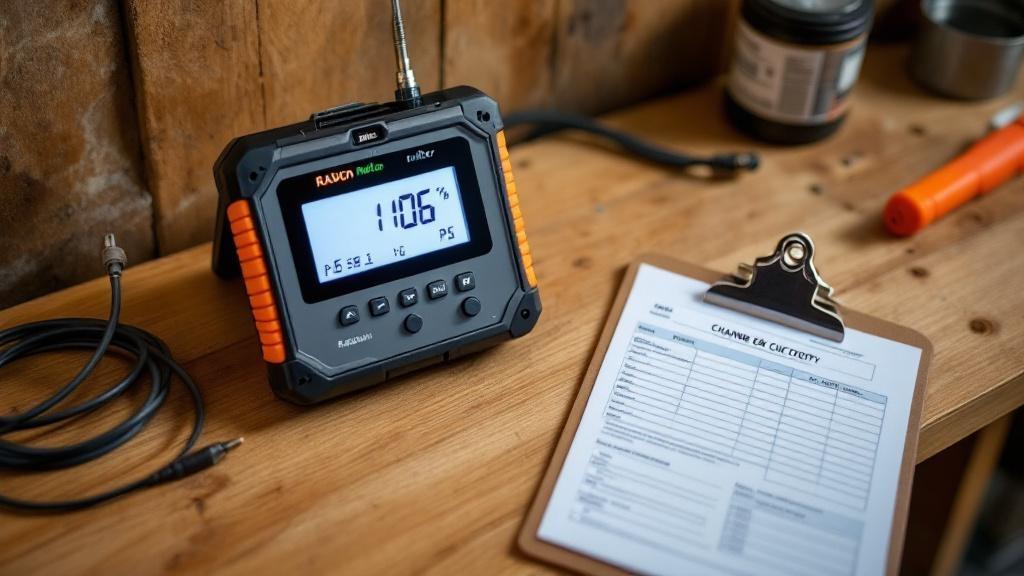
Measurement is where every radon decision starts, and in Iowa it is regulated work: testing for a fee requires an Iowa HHS credential under Iowa Code chapter 136B. A placed test answers one of three questions: what this house reads under controlled conditions, what it averages across a heating season, or whether a new mitigation system did its job. That last test always comes from a firm other than the installer, which is Iowa's built-in second opinion.
Typical pricing
$125-$300
Pricing varies by job specifics. Free phone or on-site quotes; fixed pricing once the technician has assessed the job.
Three kinds of test, three different questions
A short-term test, two to seven days for most devices, is the screening tool and the sale tool. Charcoal kits, electret chambers, and continuous monitors all work at this length; a continuous monitor adds an hourly trace that shows whether the result was steady or spiked with a weather front, which matters in a state where winter storms roll through weekly.
A long-term test runs beyond 90 days, usually on an alpha-track detector, and it answers the question the EPA's risk tables are actually built on: the average your family breathes across the year. For a borderline first result in your own home, a detector set out in October and collected in March is the steadier basis for a $1,200-plus decision than any snapshot.
The third kind is verification. After a mitigation install, Iowa expects the post-mitigation measurement to come from someone outside the installer's firm, so the verification test is its own appointment with its own certified professional. Treat the three as different instruments, not better and worse versions of one. Our comparison of active and passive systems shows where each number leads, and the testing-season FAQ covers timing.
Placement and closed-house conditions in a central Iowa winter
A radon number is a measurement of the house as operated, so the operating conditions are part of the method. For short tests, closed-house conditions start 12 hours before the device goes out and hold through the test: windows shut, doors used only for coming and going, furnace running normally. Central Iowa makes this easy from November through March, which is one reason the heating season is testing season here.
Placement does the rest. The device belongs in the lowest level of the home that is regularly used, in a room someone actually occupies, out of kitchens, bathrooms, and laundry rooms, up off the floor, away from exterior walls, drafts, heat sources, and the sump. In a split-foyer, that usually means the lower family room; in a walkout, the finished rec room against the buried wall. A house with two foundation types deserves a device over each.
Two central Iowa cautions: skip the window-rattling storm days, since big pressure swings distort short tests, and if the house has a mitigation system, leave it running, because the point is to measure the house as it lives. For a home sale, device tampering is the classic dispute, so sale tests here use devices and placements chosen to make interference evident. See how to run your own kit.
Reading an Iowa result without panic or shrug
The EPA's action level is 4.0 pCi/L: at or above it, fix the home; between 2 and 4, consider fixing it, since no level is risk-free. What makes Iowa different is how often the first branch comes up. The Iowa Radon Survey found 71.6 percent of homes above 4 pCi/L, the largest share of any state, and lab data compiled for AARST's state report card put 58 percent of 95,245 Iowa tests from 2008 to 2017 above the action level. In most states an elevated result is the exception; here it is the coin flip you should expect to lose.
So the playbook is short. Below 2, retest in two years and after any renovation that touches the foundation. Between 2 and 4, run a long-term test across a heating season before deciding, and weigh who sleeps or works on the lowest level. At 4 or above, get a mitigation quote; at very high readings, in the territory the state average of about 8.5 pCi/L makes common here, treat the fix as this season's project rather than someday's.
One number never transfers: your neighbor's. Till, loess, backfill, and foundations change house to house, and two houses on one street can read far apart. The only house your result describes is yours.
Service area
Radon Testing is available across Des Moines and central Iowa. Per-suburb pages: